
What is Polocrosse?
As the name implies, polocrosse is a combination of polo and lacrosse — played on horseback, on grass in summer and in the arena over winter.
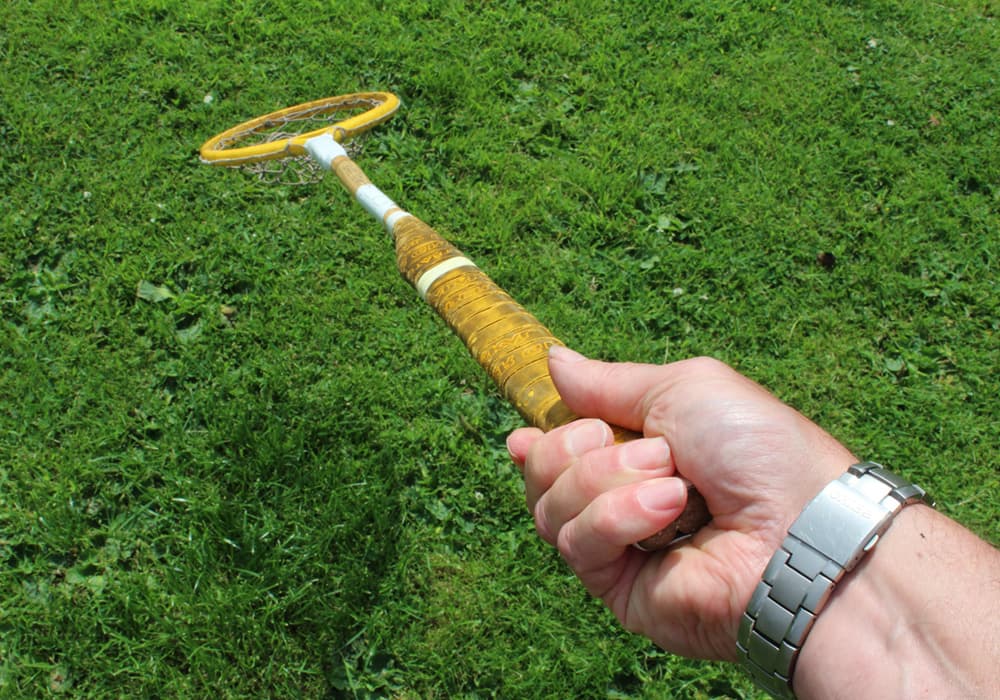
Each rider uses a racquet with a loose thread net in which the ball is carried. The ball is made of sponge rubber and is approximately 4″ across. The objective is to score goals by throwing the ball between your opponent's goal posts.
Polocrosse is appealing as a sport for the whole family, attracting a wide range of ability levels. Club-level polocrosse is generally very sociable — for riders and non-riders alike.
Who Can Play?
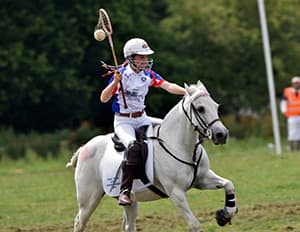
The basic requirement for a successful polocrosse player is a love of horses and the ability to ride. Stick and ball skills improve with regular practice, and a competitive edge becomes important in tournament play.
Polocrosse is played across the world, with the ‘big 8’ nations being Australia, Ireland, New Zealand, South Africa, the UK, the USA, Zambia and Zimbabwe. The sport is also thriving in Europe and a growing number of other countries including Canada.
If you already have a horse, you are halfway there. All you need in addition are a few safety items — bandages and bell boots — plus a polocrosse stick and ball for yourself. You're ready to play!
What About My Horse?
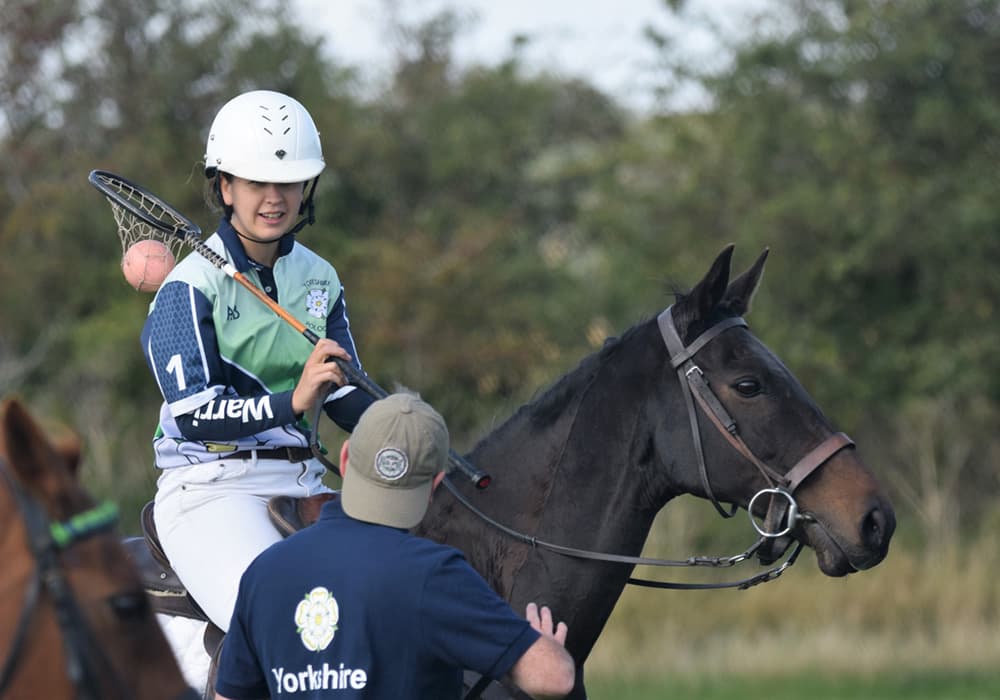
Unlike polo, players are only allowed to play one horse in a normal tournament, except in the case of injury. During the UK season you will find thoroughbreds rubbing shoulders with Highlands, or Shetlands playing against sports ponies.
Primary Juniors (aged 12 and under) must play on ponies 13.2hh or under, and Open Juniors (aged under 16) must play on ponies over 13.2hh. There are no other size restrictions — you can play on any horse.
The better you become, the more important it is for the horse to be agile. Top-grade players generally use thoroughbreds, or horses crossed with quarter horses or Australian Stock Horses, between 14.2hh and 16hh. There is also an award at each tournament for the best retrained racehorse.
How Many are on a Team?
A team consists of six players, divided into two sections of three who play alternate chukkas of a maximum of 8 minutes each. Six or eight chukkas make up a full match. The three players in each section play as a No. 1 ‘attack’, a No. 2 ‘centre’, or a No. 3 ‘defence’.
No.1 — Attack
The only player permitted to score goals. Plays in the attacking goal scoring area and focuses on speed and accuracy with the racquet.
No.2 — Centre
The link player who covers the full length of the midfield. Not allowed in either goal scoring area. Supports both attack and defence.
No.3 — Defence
Guards the goal. The only player permitted in their own goal scoring area. Prevents the opposing No.1 from scoring.
What Does the Pitch Look Like?
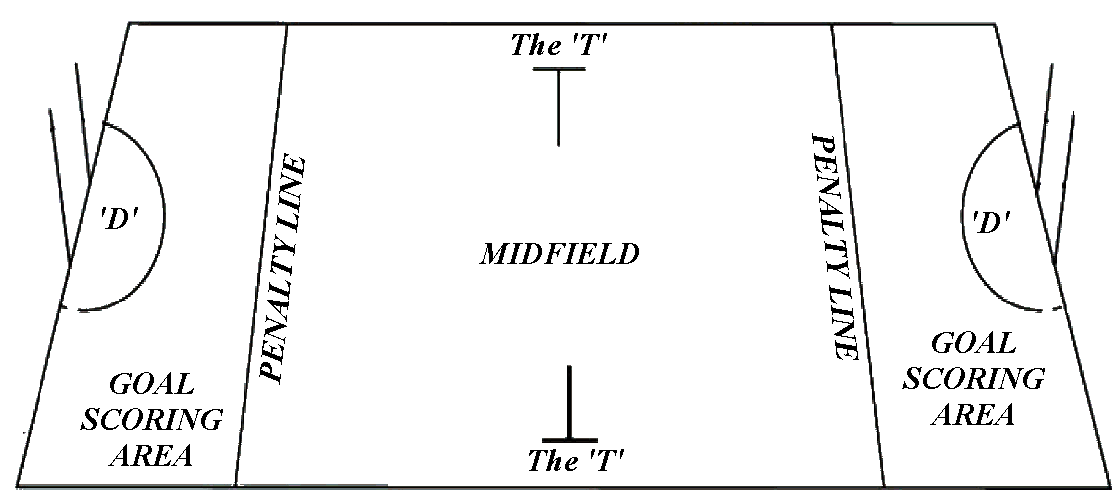
The field is 60 yards (55m) wide by 160 yards (146.5m) long, with three separate areas. The goal scoring areas at each end are 30 yards long. Only the No.1 of the attacking team and the No.3 of the defending team can enter these areas.
The middle area — the midfield — is 100 yards long. The line separating the goal scoring and centre areas is called the penalty line. Goal posts are 8 feet apart, and to score, the ball must be thrown from outside an 11-yard semi-circle in front of the goal (the ‘D’).
How Is the Game Played?
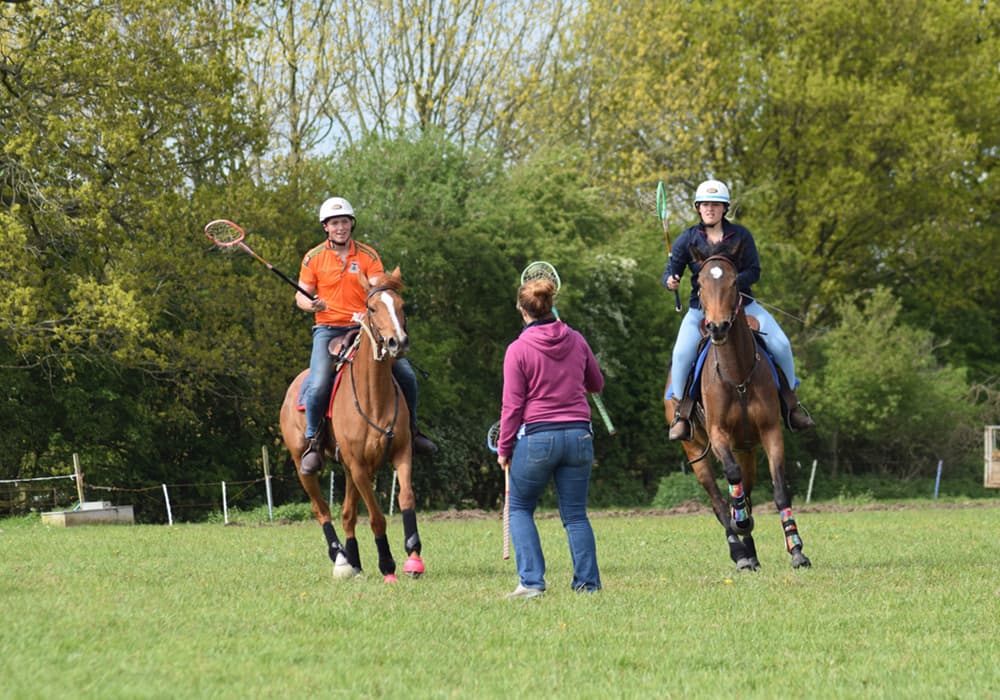
Players can pick the ball up from the ground, catch it in their racquet, and ride with it. They pass it between team-mates until the No.1 has possession in the goal scoring area.
A player cannot carry the ball over the penalty line — they must bounce it so that they do not have possession while actually crossing the line. Alternatively, the ball can be thrown to a player over the line.
When carrying the ball, a player must keep it on their stick side. Right-handed players must carry it on the offside of the horse. They may pick up or catch the ball on the non-stick side, provided they immediately bring it back to their stick side.
How Does a Chukka Start?
Each chukka commences in the centre field with the players lining up, one section beside the other, with the No.1s in front. This is called a line out. The umpire then throws the ball over the players' heads.
The game recommences in the same way after a goal has been scored. Whenever an attempt at goal fails, the No.3 throws the ball back into play from behind the penalty line, as directed by the umpire.
How Do You Get the Ball from Your Opponent?
Hitting at an opponent's stick — either to dislodge the ball or to prevent them from gaining possession — is allowed in an upward direction only. Riding off is allowed, but crossing, stopping over the ball, or elbowing are fouls. Sandwiching one player between two others also constitutes a foul. Fouls result in a free throw to the offended side.
What Equipment Will I Need?
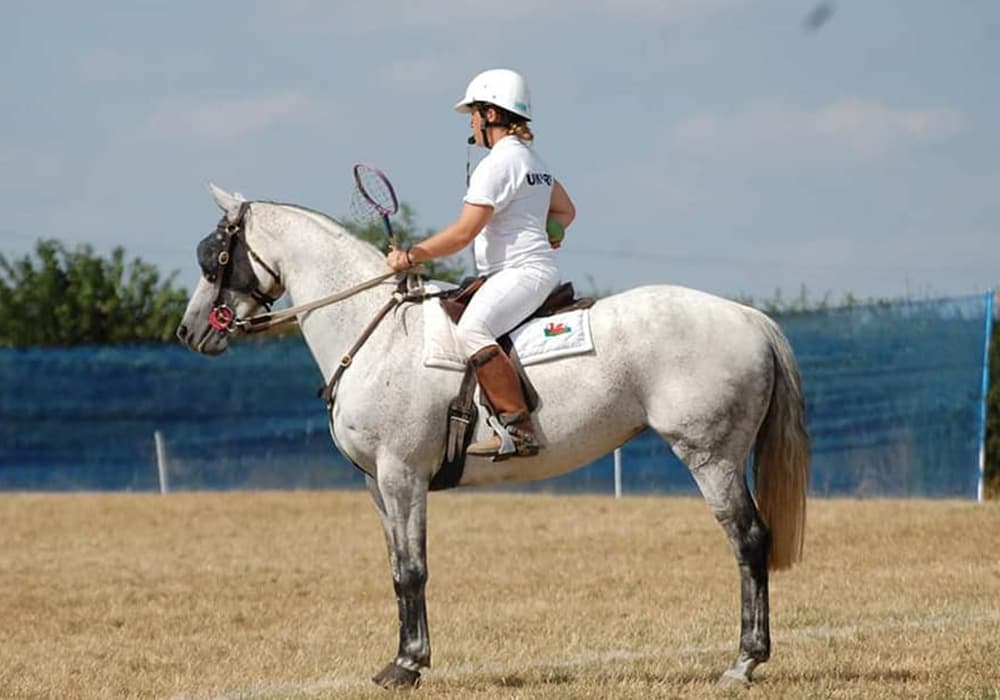
Basic requirements for the rider are a recognised safety helmet, correct riding footwear, and a racquet. For the horse you will need leg protection (polo bandages or sports boots) and overreach boots on all four legs, as well as a breastplate in addition to your usual tack.
To get started you will need little more than this. For new players, clubs are often able to provide the more specialist equipment for your early days in the sport.
How Often Is Polocrosse Played?
Clubs meet regularly for practice. The grass season runs from May to September, with tournaments taking place most weekends somewhere in the UK. The major event of the year is the Club National Championships, held at the end of August.
The arena season runs from October to April, with two league series: the Winter League from October to December, and the Spring League from February to April. Some players stay involved throughout the year, while others play just the grass or arena season depending on their other equestrian activities.
Is It Expensive to Play?
Polocrosse is relatively affordable compared to many other horse sports. UKPA membership is reasonably priced with a variety of rates and discounts for new members. A new racquet and ball will cost around £100, though most clubs will lend you theirs until you are ready to invest. Most people will already have appropriate headgear, leg wraps, and other items in their tack room.